Choosing the Right Commercial Garage Door for Your New Construction or Retrofit Project
Choose a commercial garage door by matching it to how the opening will be used: how many times a day it cycles, the size of the opening, the headroom and side room available, and your needs for security, insulation, wind resistance and appearance. Sectional doors suit most general uses, rolling steel and sheet doors fit tight spaces and high security needs, high-speed doors suit busy interior openings, and full-view doors fit storefronts and showrooms.
Key takeaways
- Start with cycles per day. It decides the spring package, operator and door type more than anything else.
- On new builds, bring your door installer in before the rough openings are framed.
- On retrofits, existing headroom and jambs limit your options, so get a site visit early.
- Plan the operator, power and safety devices at the same time as the door.
A commercial garage door is easy to treat as a line item until it slows down a dock, fails an inspection or won't fit the opening. Whether you are building a new facility or replacing doors in an older one, a little planning up front saves change orders, delays and early repairs.
This guide walks through the main commercial door types, the questions that narrow the choice, and the differences between planning doors for new construction and for a retrofit.
What are the main types of commercial garage doors?
| Door type | Best for | Keep in mind |
|---|---|---|
| Sectional | Warehouses, docks, service bays, general use | Needs headroom and ceiling space for tracks. Easy to insulate and add windows. |
| Rolling steel | High security, tight headroom, exterior openings | Coils above the opening, so ceiling space stays free. Very durable. |
| Sheet (roll-up) | Self-storage, light industrial, budget projects | Lighter and more affordable than rolling steel. Best for lower cycle counts. |
| High-speed | Busy interior openings, temperature-controlled areas | Fast cycles cut energy loss and wait times. Higher up-front cost. |
| Full-view | Restaurants, showrooms, service write-up areas | Aluminum and glass add light and style. Less insulating than solid steel. |
| Fire doors | Openings in fire-rated walls | Must meet NFPA 80 and be inspected and tested every year. |
If you are deciding between two of these, our posts on sheet doors vs. rolling steel and full-view doors in commercial settings go deeper.
What questions narrow down the right door?
- How many times a day will it open? A dock door that cycles all day needs high-cycle springs and a heavy-duty operator. A storage door used once a week does not.
- How big is the opening, and how much room is around it? Headroom above the opening and side room next to it decide whether tracks or a coil will fit.
- What are you protecting? High-value inventory points to heavier gauge steel and secure locking.
- Is the space heated or cooled? Conditioned spaces benefit from insulated doors and good seals.
- What wind load does the building need? Larger exterior doors often need wind-rated construction to meet code.
- How should it look? Customer-facing doors may call for glass, color or a finish that matches the building.
How should you plan doors on a new construction project?
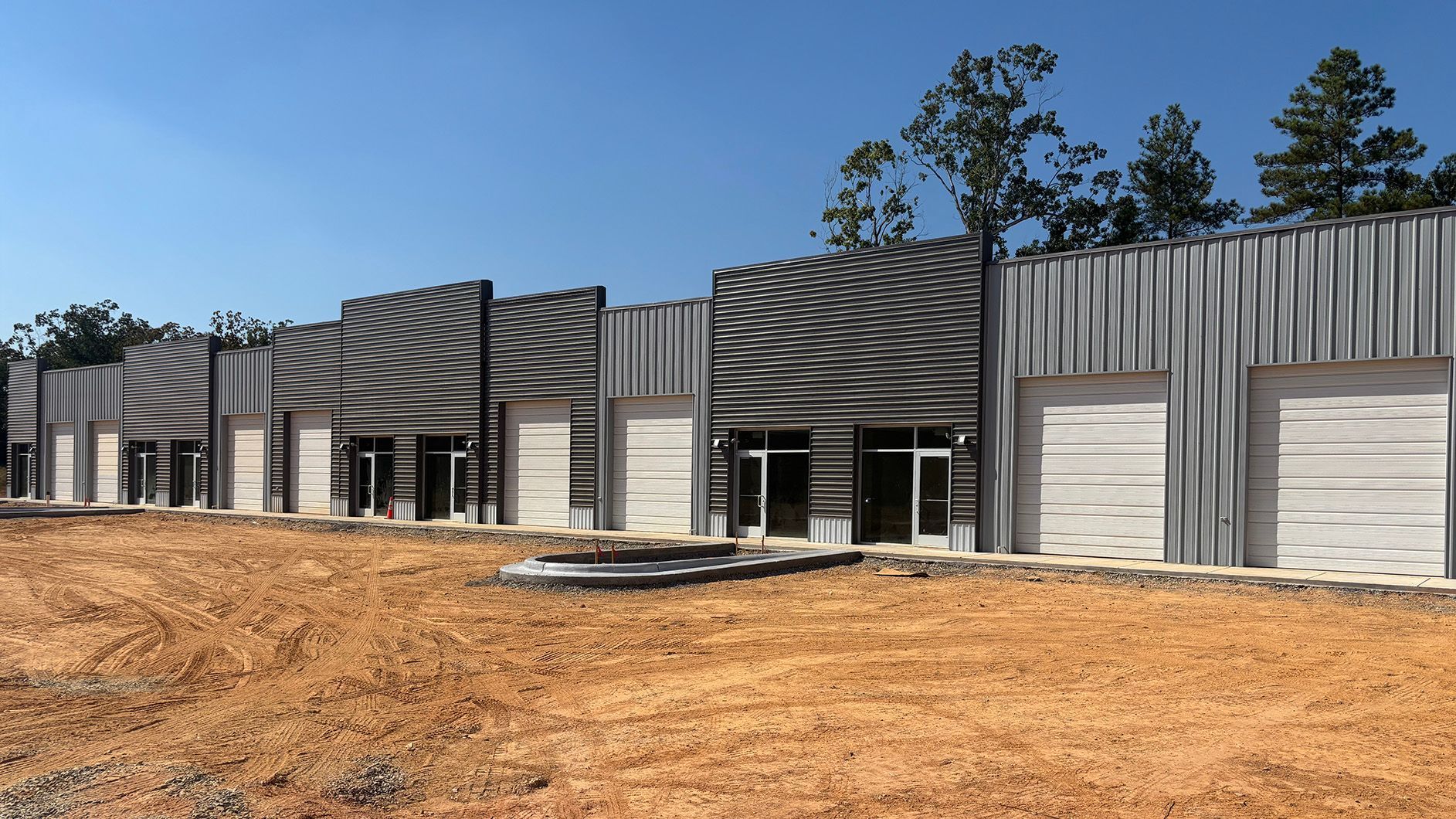
New construction gives you the most options, as long as door decisions happen early. We recommend bringing in your door installer during design or before framing, so you can:
- Set rough openings and headroom that fit the door type you want
- Confirm jamb material and mounting surfaces for tracks or coils
- Plan power and conduit for operators, photo eyes and controls
- Match wind load and fire ratings to the drawings and local code
- Schedule installation so doors secure the building as soon as possible
Coordinating with your general contractor early avoids the most common problem we see: an opening that is framed before anyone checks whether the chosen door will fit.
What changes on a retrofit or replacement project?
In an existing building, the opening sets the rules. Low headroom, ductwork, lights or sprinkler lines can block standard tracks. In those cases, a rolling door or a custom track system may solve the problem. We also check the condition of the jambs and header, since a new door needs a solid surface to mount to.
Retrofits also have to work around a running business. We plan replacements to limit downtime, often one door at a time, and we haul away the old door. If your current doors are near the end of their life, our commercial door replacement page explains our process.
Which specs matter most on a commercial door quote?
When you compare quotes, make sure each one spells out:
- Spring cycle rating: standard or high-cycle, matched to your daily use
- Steel gauge and construction: thicker steel resists dents and forced entry
- Insulation and seals: type and thickness for conditioned spaces
- Wind rating: if required for the opening
- Operator: duty rating, safety devices and controls
- Warranty: what is covered on the door, springs and operator
Planning for upkeep matters too. Busy doors last longer on a schedule like the one we describe in why commercial preventive maintenance saves money.
How Garage Door Doctor helps with commercial door projects
We install commercial doors from trusted manufacturers including CHI, Amarr, DoorLink, Haas and Clopay, paired with LiftMaster commercial operators. Offering multiple brands lets us match the right door to your opening and budget instead of forcing one product into every job. Every project starts with a site visit and an upfront, written price.
From new builds in Concord and Huntersville to retrofits in Charlotte and Rock Hill, our commercial installation team handles everything from layout to final safety testing.
Frequently asked questions
What is the most common type of commercial garage door?
Sectional doors are the most common commercial door because they work well for most openings, are easy to insulate and can include windows. Rolling steel doors are a common choice where headroom is limited or security is a priority.
When should a door installer be involved in new construction?
As early as possible, ideally during design or before the rough openings are framed. Early input makes sure the openings, headroom, power and mounting surfaces fit the doors you plan to install.
What if my building has low headroom?
Low headroom can often be solved with a rolling steel door or a custom track system that changes how the door travels. A site visit will show which option fits your opening.
Do commercial garage doors need wind ratings?
Many exterior commercial doors must meet wind load requirements based on the building's location, size and code. Your door installer should confirm the rating needed for each opening.
How long does a commercial garage door last?
It depends on the door type, how often it cycles and how well it is maintained. Matching the spring and operator to your usage and keeping the door on a maintenance plan are the best ways to extend its life.
Planning a new build or a door upgrade?
Send us your drawings or schedule a site visit. We will recommend the right door for each opening and give you upfront, written pricing.