How Commercial Garage Doors Hold Up During Peak Hurricane Season in the Carolinas
Garage Door Doctor
How Commercial Garage Doors Hold Up During Peak Hurricane Season in the Carolinas
Hurricane season puts every part of a commercial building to the test, and few components take on more pressure — literally — than the garage door. For warehouses, distribution centers, fire stations, and retail properties across Charlotte and the surrounding Carolinas, a garage door isn't just an entry point. It's often the largest moving structural opening in the building, and if it fails during a storm, wind and water can get inside fast. We work with commercial property owners and facility managers throughout the region, and this time of year, one question comes up more than any other: is our door actually built to handle a hurricane?
Below, we break down what makes a commercial door storm-ready, how wind load actually affects performance, and what to look for before your next severe weather event.
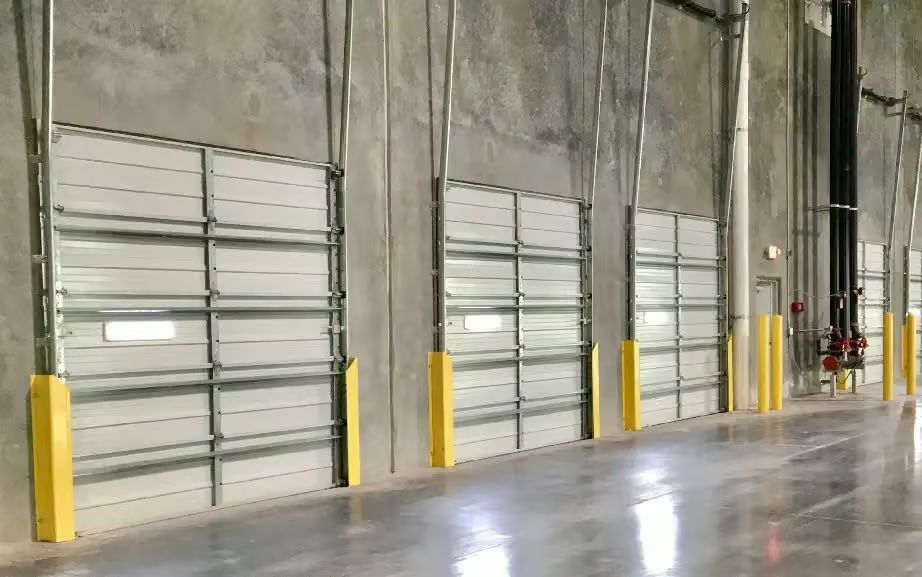
Understanding What Makes a Garage Door Hurricane-Proof in the Carolinas
No garage door is truly "hurricane-proof," but a properly engineered commercial door can be hurricane-rated, meaning it's been tested and certified to withstand specific wind pressures and windborne debris impact without failing. In the Carolinas, that matters because our region sees a mix of direct coastal landfalls and inland remnant storms that still carry damaging straight-line winds, particularly through Mecklenburg and York Counties.
A hurricane-rated door is built with reinforced panels, heavier-gauge steel, stronger track systems, and hardware rated for specific wind speeds. It's tested to standards that measure both positive pressure (wind pushing on the door) and negative pressure (wind pulling the door outward, which is often the more destructive force). If you're not sure whether your current setup meets that bar, our
commercial preventive maintenance team can evaluate it as part of a routine inspection.
How Wind Load Affects Commercial Garage Door Performance
Wind load is the amount of force wind exerts against a surface, and commercial garage doors are uniquely vulnerable because of their size. A large sectional or rolling steel door has significantly more surface area than a residential door, which means the same wind speed generates far more total force against it.
When a door isn't rated for the wind load it's exposed to, a few things can happen: panels can buckle, tracks can pull away from the frame, or the door can be forced off its rollers entirely. Once a large opening like a garage door fails, internal pressure inside the building spikes, which can compromise the roof and walls too. This is why wind load isn't just a "door" issue — it's a whole-building issue, and it's central to how we approach
commercial garage door installation for clients in storm-prone areas.
Choosing the Right Hurricane-Rated Door for Carolina Businesses
The right door depends on the building's use, exposure, and local wind zone requirements. A distribution center near I-77 has different needs than a retail storefront in downtown Charlotte, and code requirements can vary depending on your county and how exposed the property is to open terrain.
We walk commercial clients through these factors directly, matching door specifications to the building's actual risk profile rather than defaulting to a one-size-fits-all recommendation. If you're planning new construction or a replacement project, our
commercial garage doors page outlines the systems we install, and our team can pull the specific wind rating documentation your project needs.
Key Features to Look For in a Hurricane-Rated Commercial Garage Door
When you're evaluating options, a few features consistently separate storm-ready doors from standard ones:
- Reinforced horizontal or vertical struts that add rigidity across the panel
- Heavier-gauge steel in the panels themselves, not just the frame
- Wind-rated tracks and end hardware designed to resist pull-out under negative pressure
- Impact-resistant materials or optional debris protection for high-exposure locations
- Certified wind speed and pressure ratings, backed by documented third-party testing
We only install and recommend from brands that meet these standards, including
LiftMaster, CHI, Haas, Clopay, and Amarr, which gives commercial clients multiple certified options rather than a single fixed spec.
Why Commercial Garage Doors Need Greater Wind Resistance Than Residential Doors
Commercial openings tend to be larger, operate more frequently, and often protect higher-value inventory or equipment than a typical residential garage. That combination raises the stakes. A failed door at a home is disruptive; a failed door at a warehouse or fire station can mean flooding, inventory loss, or an entire facility going offline during the exact moment it's needed most.
Commercial doors also see far more daily cycles than residential doors, which means wear on tracks, springs, and hardware compounds faster — and that wear can quietly reduce a door's actual wind performance well before it visibly fails. That's part of why we treat commercial
spring replacement and hardware upkeep as safety issues, not just convenience ones.
Rolling Steel vs. Sectional Garage Doors: Which Is Best for Storm Resistance?
Two door types dominate commercial storm-readiness conversations:
rolling steel doors and
sectional garage doors. Both can be built to hurricane-rated specifications, but they perform differently, and the right choice depends on the building.
How Rolling Steel Doors Provide Structural Wind Resistance
Rolling steel doors coil into a compact housing above the opening and are built from continuous interlocking steel slats. That design gives them excellent resistance to lateral wind pressure and makes them a strong fit for high-security or high-exposure commercial applications like warehouses, loading docks, and industrial facilities. Because the slats interlock along the full width of the opening, there are fewer stress points for wind to exploit compared to a paneled system.
Sectional Doors and Their Performance in Hurricanes and Severe Storms
Sectional doors, built from hinged horizontal panels that travel along a vertical then horizontal track, can also be engineered for high wind resistance, especially when reinforced with heavier steel and rated hardware. They're often the better fit for retail storefronts, showrooms, and businesses that want the aesthetic flexibility of a paneled door without sacrificing storm performance. The tradeoff is that sectional systems have more moving joints than rolling steel, which makes correct installation and ongoing track alignment even more important for maintaining rated performance.
Neither option is universally "better" — it comes down to the building's use case, and it's a conversation worth having before a storm, not during one.
The Importance of Proper Installation and Maintenance for Storm Safety
A hurricane-rated door is only as strong as its installation. Improper mounting, misaligned tracks, worn rollers, or incorrectly torqued hardware can quietly undermine a door's rated wind performance, even if the door itself meets spec on paper. This is one of the most overlooked risks in commercial storm preparation: business owners assume that because they bought a rated door, they're covered — without confirming it was installed and is maintained to that rating.
Regular inspection catches these issues before they become failures. Our
commercial preventive maintenance and
maintenance programs are built around exactly this: checking hardware torque, track alignment, panel condition, and spring tension well ahead of storm season, not after damage shows up.
Why Professional Labor, Service, and Showroom Support Matters for Commercial Clients
Commercial door decisions involve more moving parts than a residential purchase — code compliance, wind ratings, multiple stakeholders, and sometimes multiple locations. That's where working with a team that offers full-service support, from showroom consultation through installation and ongoing service, makes a measurable difference. We're a fully stocked, background-checked, and professionally trained team, which means commercial clients get consistent expertise across the entire process instead of piecing it together from multiple vendors. You can see the full range of what that looks like on our
services page.
Case Study: Large-Scale Commercial Garage Door Resilience Near Lake Norman
To see wind-rated design in action, consider a large-format commercial building near Lake Norman — the kind of high-exposure, semi-open-terrain property common throughout our
Cornelius and
Davidson service areas. Properties like this typically carry large door openings, which means more surface area exposed to wind and a correspondingly higher engineering standard for the door system.
In these settings, we typically recommend reinforced rolling steel or heavy-gauge sectional systems with rated tracks and hardware, paired with a maintenance schedule that checks alignment and hardware integrity at least twice a year. It's this combination — the right door, installed correctly, and inspected consistently — that determines whether a large commercial opening holds up when a storm actually arrives, rather than the door choice alone.
Preparing for Hurricanes: Steps to Protect Your Business Garage Doors
A few practical steps go a long way before a storm is on the radar:
- Confirm your door's actual wind rating — don't assume; verify it with documentation.
- Schedule a pre-season inspection to catch worn rollers, loose hardware, or track misalignment.
- Test manual override procedures in case of power loss, since automated systems may not function during an outage.
- Clear the area around the door of loose debris or equipment that could become a projectile.
- Keep a service contact on hand so repairs can happen quickly if damage does occur.
Our team can walk through all five of these during a single
commercial preventive maintenance visit, which is the fastest way to know where you stand before storm season peaks.
Verdict: Prioritize Storm-Readiness When Choosing a Commercial Garage Door for Your Property
For commercial properties across Charlotte, Lake Norman, and the surrounding Carolinas, storm-readiness shouldn't be an afterthought — it should be part of the original door selection and an ongoing part of maintenance. Whether rolling steel or sectional is the right fit depends on your building, but the real determining factor in how a door performs during a hurricane is almost always installation quality and upkeep, not the door alone.
Take Action Now to Protect Your People and Property This Hurricane Season
If you're unsure whether your current commercial garage door is rated, installed correctly, or overdue for inspection, now — before storm season peaks — is the time to find out. Request a quote for a wind-rated door upgrade, or contact our commercial team to schedule a storm-readiness inspection. We're a locally owned, background-checked, fully stocked team that's been serving Charlotte-area businesses since 2005, and we'd rather help you prepare now than repair after the fact.